Which face
is yours?
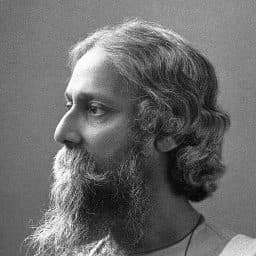
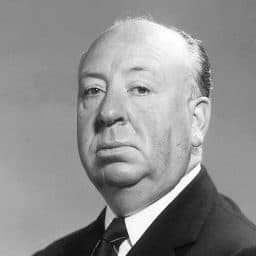
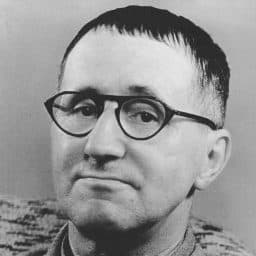
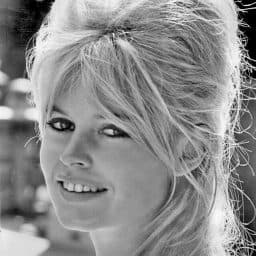
Drop in a photo. StarMatch embeds your face into 128 dimensions and ranks it against 2066 public figures — without your picture ever leaving this tab.
- 128
- dimensions
- 2066
- public figures
- 0
- photos uploaded
- 1.0 MB
- index size












































Why it is built this way
Nothing leaves
your browser
No upload, no storage
Detection and embedding both run in WebGL on your own device. There is no upload endpoint to secure, no bucket to leak, and no retention policy to trust — because the photo is never transmitted in the first place.
183 KB index
2066 faces stored as 128-float vectors. Small enough to ship as a static asset.
Honest scoring
Scores come from 2,133,145 measured stranger pairs, not an invented percentage.
Every portrait is licensed
The gallery is built from Wikimedia Commons and filtered to CC and public-domain images only. Photographer and licence are recorded for each one and listed on the attribution page.
The pipeline
Four steps, zero servers
Detect
An SSD-MobileNet pass finds every face in the frame and scores each box. If more than one person is present, the largest face wins.
Landmark
68 points are placed along the jaw, brows, eyes, nose and mouth. These are what let the crop be rotated and scaled to a canonical pose.
Embed
A ResNet-34 maps the aligned crop to 128 numbers. Faces of the same person land close together in that space; different people land apart.
Rank
Euclidean distance against all 366 gallery vectors, sorted ascending. 366 comparisons of 128 floats is trivial work — it finishes in milliseconds.
This is a similarity toy, not an ID system
In this gallery the two most similar different people sit 0.31 apart — below the 0.6 distance conventionally read as “same person”. That single number is the whole argument against using face matching to decide anything that matters.
Read the limitations